A World Cup penalty shootout is one of the most intense moments in all of sport. With an entire nation watching, one kick can define a player’s legacy forever. But is there a science to winning one?
With the 2026 World Cup knockout rounds underway, here is a look at what every shootout in World Cup history can teach us about winning from 12 yards.
How World Cup Penalty Shootouts Work
A penalty shootout happens when a knockout match ends in a draw after extra time. Each team takes five penalties. If the score is still level after five, it moves to sudden death — one kick each until someone misses and the other scores.
Since the format was introduced in 1982, there have been over 30 World Cup shootouts. Some are remembered for iconic moments, others for heartbreak. All of them offer data on what works and what does not.
The Numbers: Where Should You Aim?
Looking at every World Cup penalty ever taken in a shootout, the data tells a clear story.
High and central is the worst place to aim. Goalkeepers stay central more often than people think, and a penalty hit high and down the middle is the most likely to be saved.
Low corners are the safest bet. Penalties aimed low to either side have the highest conversion rate. The reasoning is simple: a well-placed low shot into the corner gives the goalkeeper almost no chance, even if they guess the right way.
Top corners are effective but risky. A shot aimed at the very top corner is almost unsavable. But the margin for error is tiny. Hit it slightly wrong and it flies over the bar. Several World Cup shootouts have been decided by a penalty that went too high.
The Psychology: Who Goes First?
The team that shoots first wins around 60% of World Cup shootouts. That is a significant advantage, and FIFA changed the format to use the ABBA system briefly before reverting to the traditional ABAB order.
The first kick sets the tone. If the opening penalty is scored, it puts immediate pressure on the second taker. A miss on the first kick can swing momentum completely.
Confidence matters more than technique at this level. Every professional footballer can place a penalty perfectly in training. The difference in a shootout is mental. Players who walk to the spot slowly, who hesitate, or who change their mind mid-run-up are statistically more likely to miss.
The Goalkeeper’s Role
Goalkeepers are often seen as heroes or villains in shootouts, but the data shows something interesting: they save fewer than 25% of World Cup shootout penalties. The odds are heavily in the taker’s favour.
That said, goalkeepers who study opponents’ tendencies can improve their chances. Many modern keepers carry notes or check tablets before each kick. Some dive the same way every time, relying on the pressure to cause the taker to miss rather than making a spectacular save.
Standing still in the middle is underrated. Research shows that penalties hit centrally are saved more often than people expect, yet goalkeepers rarely stay put because it feels wrong to not dive.
Famous World Cup Shootout Lessons
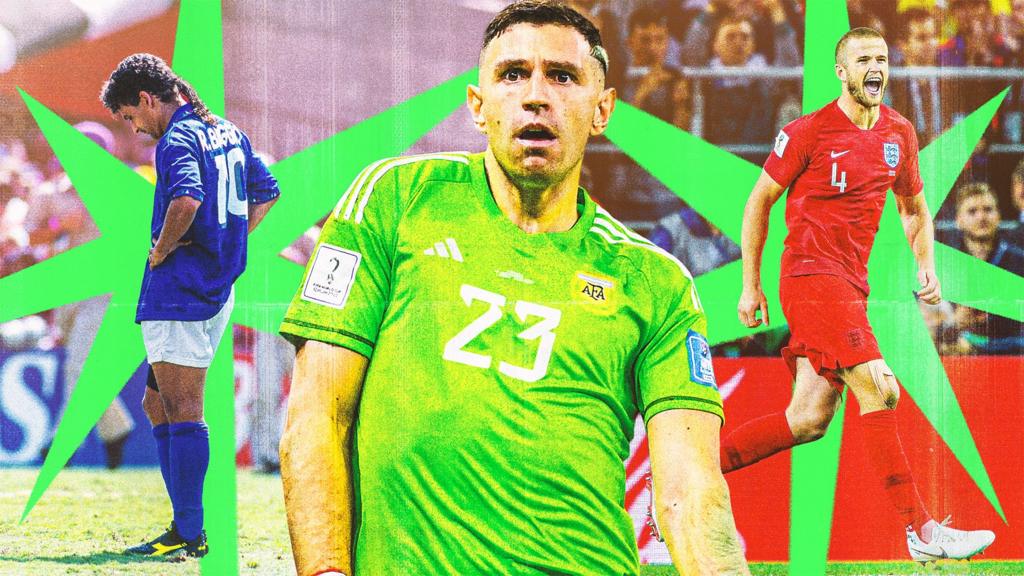
Italy 1990: England lost to West Germany in the semi-finals. Stuart Pearce’s penalty was saved — he later became a vocal advocate for practising penalties under pressure.
France 1998: Argentina lost to the hosts in the quarter-finals. The pressure of the Stade de France crowd played a role.
Germany 2006: Argentina lost to Germany again in a shootout. Germany’s preparation was famously meticulous — their goalkeepers studied every taker.
Brazil 2014: Brazil beat Chile in the round of 16, but the tension was unbearable. Neymar’s tears before his kick showed how much pressure these moments carry.
Russia 2018: Croatia beat Denmark and then Russia in back-to-back shootouts, showing that composure and experience can carry a team deep into a tournament.
What It Takes to Win
The best shootout teams share a few traits:
- Preparation: They practise penalties regularly, not just the day before a match
- Order of takers: The best takers go first, not the captain or the star player by default
- Goalkeeper research: Modern teams give keepers detailed scouting reports
- Mental resilience: Teams that have won shootouts before tend to win them again
England, historically one of the worst shootout teams in World Cup history, have improved significantly in recent tournaments by treating penalties as a trainable skill rather than a lottery.
What to Watch in 2026
With the knockout rounds of the 2026 World Cup now underway, penalty shootouts are almost certain. The expanded format means more high-stakes matches, and the North American heat could lead to more extra-time fatigue.
Watch for teams with experienced goalkeepers and deep squads. A shootout is not just about five takers — it often goes to sudden death, and the sixth, seventh, or eighth taker can decide everything.
The team that treats penalties as a science, not a coin flip, will have the edge.