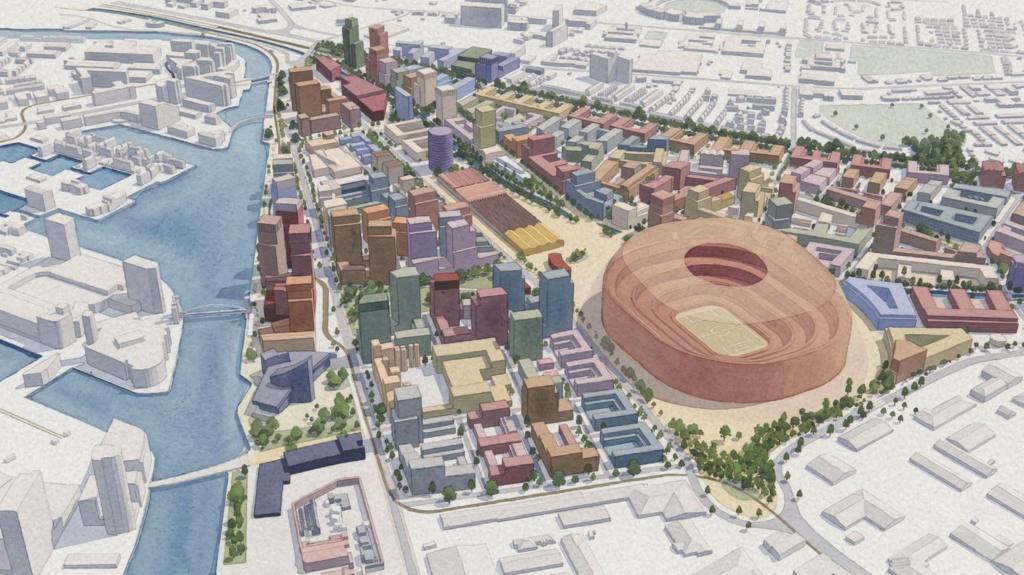
Manchester United are set to explore a naming rights deal for their planned new stadium, as the club takes a “sanity, not vanity” approach to the massive £2 billion redevelopment of Old Trafford.
The Stadium Plans
United announced ambitious plans to build a brand-new stadium to replace the iconic Old Trafford. The project is one of the most expensive in football history, with a total cost estimated at around £2 billion.
The club’s leadership has made it clear they want to be financially smart about the build. Rather than treating it purely as a prestige project, they are looking at every possible way to fund and offset the enormous costs.
Naming Rights on the Table
One of the biggest revenue opportunities is selling the naming rights to the new ground. This would allow a major brand to put their name on the stadium in exchange for a significant annual fee or a one-off payment.
Naming rights deals are common in football across Europe and the rest of the world. Clubs like Manchester City (Etihad Stadium), Arsenal (Emirates Stadium), and Bayern Munich (Allianz Arena) have all benefited from these partnerships.
For United, a naming rights deal could be worth tens of millions per year. Given the club’s global fanbase and commercial appeal, the deal could set new records for football stadium sponsorships.
“Sanity, Not Vanity”
The phrase “sanity, not vanity” captures United’s philosophy on the project. The club wants to make sure every pound spent serves a practical purpose, and every revenue stream is explored.
This is a shift from how some clubs have approached stadium builds in the past. Rather than simply spending to impress, United are focused on long-term financial sustainability.
The naming rights search is part of this broader strategy. The club will look for a partner that aligns with their brand values and can contribute meaningfully to the project’s funding.
What It Means for Fans
For supporters, the idea of Old Trafford having a corporate name is emotional. The ground has been known as the “Theatre of Dreams” for decades, and many fans feel strongly about keeping that identity.
However, the reality of modern football economics means clubs need to find creative ways to fund major infrastructure projects. A naming rights deal does not change the location or the history — it simply adds a commercial layer to the stadium’s identity.
The key for United will be finding a partner that respects the club’s heritage while providing the financial support needed for such a massive build.
The Bigger Picture
United’s approach reflects a wider trend in football. Stadium naming rights have become one of the most valuable commercial assets a club can offer. The deals bring in significant revenue without affecting what happens on the pitch.
If United secure a record-breaking naming rights deal, it could set a new benchmark for the sport. Other clubs watching closely may follow suit with their own stadium projects.
The £2 billion stadium is still in the planning stages, but the commercial strategy is already taking shape. Naming rights are just one piece of a much larger puzzle.
What to Watch
Expect more details on the naming rights search in the coming months. United will likely approach global brands across technology, finance, and other sectors. The final deal could reshape how football clubs think about stadium commercial partnerships for years to come.