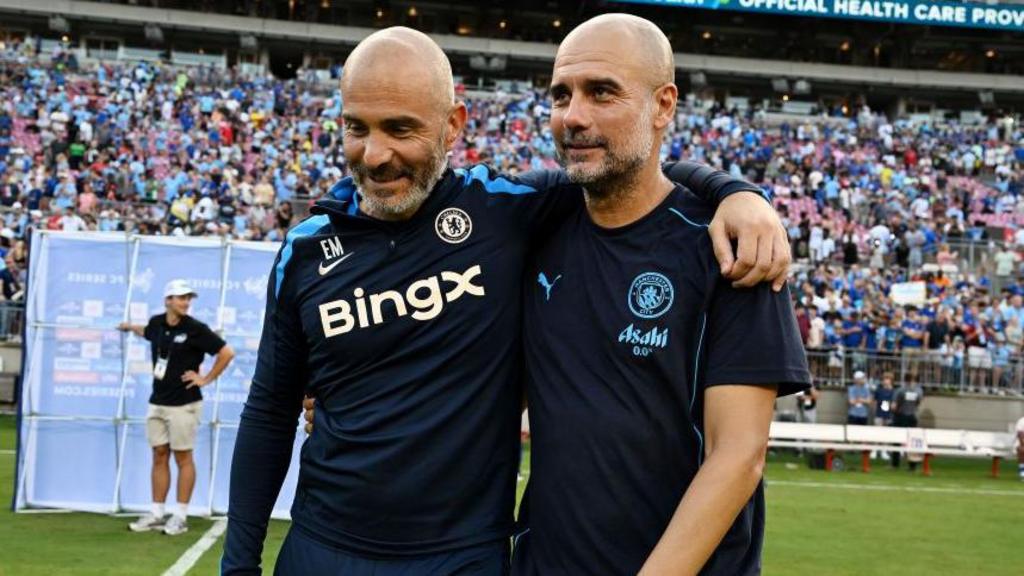
Enzo Maresca is back at Manchester City. The Italian, who served as Pep Guardiola’s assistant during the club’s Treble-winning 2022-23 season, has signed a three-year deal to succeed his former boss as head coach.
The appointment is a statement of intent. City could have looked outside for a completely different direction, but instead they chose someone steeped in the same footballing philosophy that defined Guardiola’s trophy-laden decade in charge.
Here is what fans need to know about the man tasked with continuing one of the most successful eras in English football.
A Coaching Path Shaped by Guardiola and Italian Tradition
Maresca’s football identity is a blend of Spanish possession play and Italian tactical thinking. His Spanish roots come from his family and his playing days at Sevilla and Malaga, where he regularly faced Guardiola’s legendary Barcelona side.
That experience left a lasting mark. Watching Barcelona dominate with technical, positional football opened Maresca’s eyes to a different way of playing the game.
His Italian side comes from studying under coaches like Carlo Ancelotti and Marcello Lippi during his playing career. He also famously wrote a 7,000-word thesis comparing football to chess at Italy’s prestigious Coverciano coaching institute, analysing a 1991 World Championship match between grandmasters Anatoly Karpov and Viktor Korchnoi.
City chairman Khaldoon Al Mubarak put it simply: Maresca has taken inspiration from Guardiola’s philosophy, but has evolved his own identity as a coach.
The Tactical Blueprint
Maresca almost always sets up his teams in a 4-2-3-1 formation. The core principles will feel familiar to anyone who watched Guardiola’s City: dominate possession, press high, and control the game through positional play.
Where Maresca adds his own twist is through fluid positional rotations. Players are not locked into rigid roles. Fullbacks drift into midfield, attacking midfielders rotate wide, and centre-backs step forward to join the build-up.
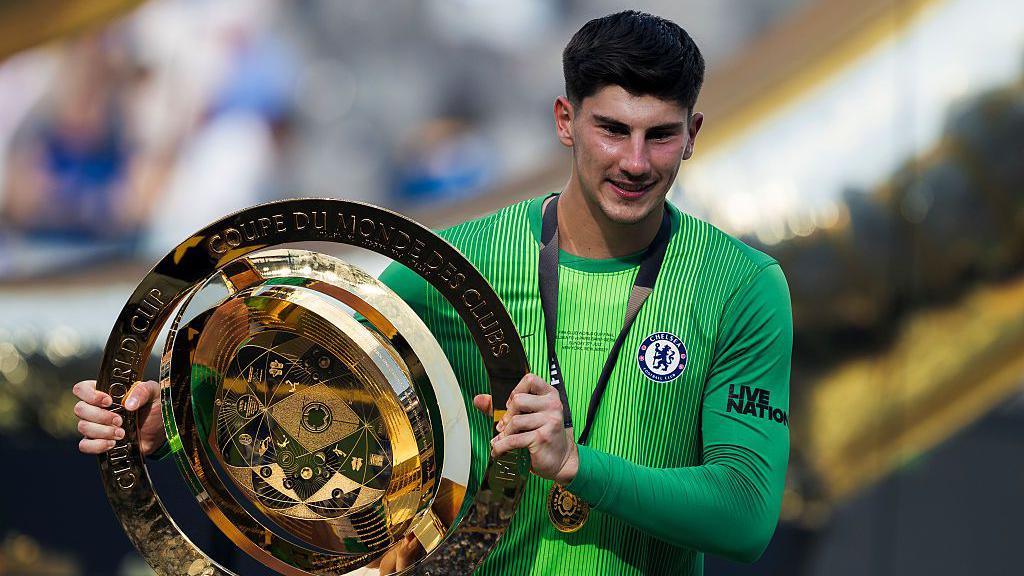
At Chelsea, this approach led to some memorable tactical moments. Marc Cucurella regularly popped up in advanced central positions, and in the Club World Cup final, Maresca deployed Malo Gusto as an asymmetric overlapping fullback on the right, which pinned back PSG’s Nuno Mendes and created space for Cole Palmer in a 3-0 win.
Critics have noted that Maresca’s teams can sometimes be too slow in their build-up play. He tends to favour control over risk, which can frustrate fans who want faster transitions. But when the system clicks, it produces dominant, suffocating performances.
His Track Record So Far
Maresca only took his first head coaching role in 2021, making his rise to the top remarkably fast. Here is the journey:
- Manchester City Academy (2020-21): Led the Elite Development Squad and impressed with his willingness to innovate tactically
- Parma (2021): A difficult first spell in senior management that ended early
- Leicester City (2023-24): Won the Championship title and earned promotion back to the Premier League
- Chelsea (2024-26): Won the Club World Cup and Conference League in his debut season, and qualified for the Champions League — the only Chelsea manager to do so under the current ownership
His Chelsea tenure ended acrimoniously. A breakdown in his relationship with the club’s hierarchy led to his departure on New Year’s Day, with Chelsea finishing 10th after his exit. City paid £17m in compensation to bring him back.
The Immediate Priorities
Maresca faces several key tasks when pre-season begins on 20 July:
- Complete the Elliot Anderson signing. The £116m deal for the England midfielder is expected to be finalised soon.
- Tie Rodri down to a new contract. The Ballon d’Or winner enters the final 12 months of his deal and is central to everything Maresca wants to do.
- Resolve the goalkeeping situation. Maresca wants a goalkeeper comfortable with the ball at his feet. Will Gianluigi Donnarumma keep the shirt, or will James Trafford get his chance?
- Recruit a right-back. Chelsea’s Malo Gusto has been linked with a reunion, while Lille’s 18-year-old Moroccan talent Ayyoub Bouaddi is also a target.
What Sets Him Apart
Maresca is not just a football coach. He studies artificial intelligence for tactical insights, reads French philosopher René Descartes during holidays, and regularly speaks with volleyball coach Julio Velasco and basketball legend Ettore Messina to steal ideas from other sports.
He is also known to be distant with the media but extremely direct with his players. When asked at Chelsea why he dropped winger Noni Madueke, his answer was simply: “Technical decision.”
His former players generally speak positively about him. At Chelsea, there was widespread frustration when his relationship with the board broke down, because the squad believed in his methods.
What to Watch
Maresca inherits a squad that won six Premier League titles under Guardiola but showed signs of decline last season. The core challenge is clear: keep the winning culture alive while putting his own stamp on the team.
The early fixtures will be telling. If City start the season with the same possession dominance but add sharper attacking rotations, fans will quickly buy in. If the build-up looks slow and predictable, the pressure will mount fast.
One thing is certain — Maresca wanted this challenge. As Khaldoon said: “This scares off many people. The beauty with Enzo is he actually wants that challenge.”