Brazil are finding their rhythm
Brazil entered this World Cup with questions hanging over them. Who was their best striker? Could Carlo Ancelotti build a team that could actually win the whole thing?
Three group games later, those questions are getting answered. Brazil topped Group C, improved with every match, and may have finally found their best starting eleven.
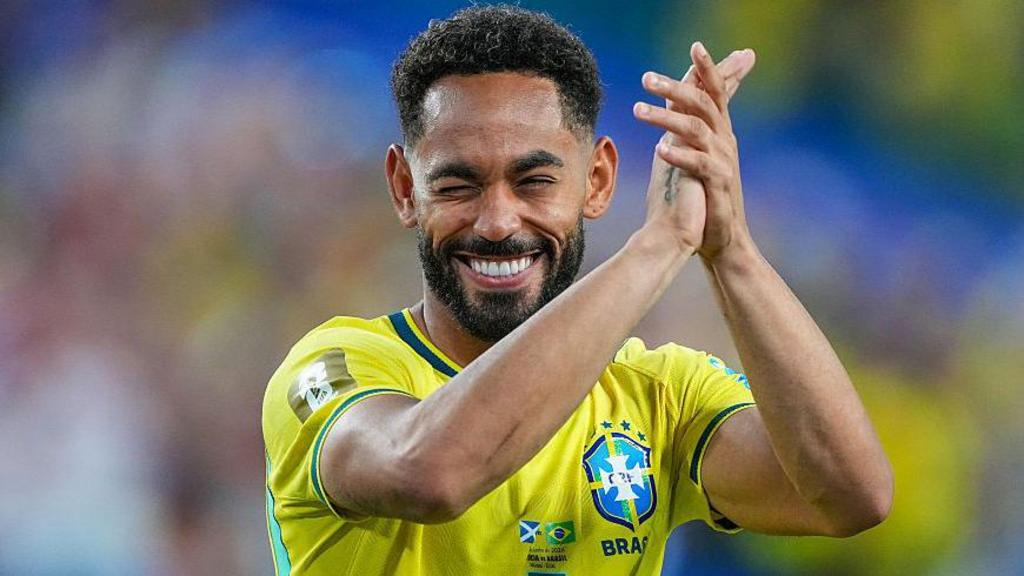
At the heart of it all is one player: Matheus Cunha.
What is a nine-and-a-half?
Cunha is not your typical Brazilian number nine. He is not a pure finisher like Ronaldo, Adriano, or Romario. He is not a classic playmaker either.
Instead, former Brazil midfielder Lucas Leiva describes him as a “nine-and-a-half” — someone who plays like a striker but also drops deep to link play, create chances, and even defend.
In many ways, Cunha reminds Leiva of his old Liverpool teammate Roberto Firmino. Like Firmino, Cunha constantly drops into midfield, leaving defenders confused about whether to follow him or hold their position.
If the defender follows Cunha, it opens up space for Vinicius Jr and Rayan to exploit. If the defender stays, Cunha gets time on the ball between the lines to pass or shoot.
Three goals and counting
Cunha has scored three goals in the group stage, including a brace against Haiti. But his value goes far beyond goals.
He is often the one who starts Brazil’s press from the front, dropping back almost into a number six position to win the ball and launch attacks. His work rate and tactical intelligence give Brazil a balance they have lacked in recent tournaments.
“It was very strange for Brazil to be going into a World Cup without knowing who our best number nine was,” Leiva wrote. “Even until the Scotland game, no-one knew who the first choice centre-forward would be.”
Ancelotti tried Cunha, Igor Thiago, Endrick, Joao Pedro, and Richarlison before settling on his preferred front three.
Ancelotti’s adaptable system
The key to Brazil’s improvement is flexibility. Ancelotti has built a system that can shift shape depending on the opponent, with Cunha as the fulcrum.
When Brazil need to control possession, Cunha drops deep and acts as a link player. When they need to counter-attack, he stays high and stretches the defense. When they need to press, he leads from the front.
This adaptability makes Brazil unpredictable — and dangerous.
What’s next?
Brazil face Japan in the last 32, a team that looked sharp in the group stage and pushed the Netherlands all the way in Group D. It will be a real test of Ancelotti’s new system.
But with Cunha pulling the strings and Vinicius Jr providing the fireworks, Brazil finally look like a team that can go deep into this tournament.
The question now is whether they can keep improving when the knockout rounds begin.